Tag Archives: Environmental Monitoring

Nov 13th water sample from Bella Bella Community School

Continue reading Nov 13th water sample from Bella Bella Community School
Radioactivity In Our Ocean: Fukushima & Its Impact On The Pacific

The following presentation is for those interested in the most recent, scientifically rigorous, monitoring data related to the impact of the Fukushima Dai-ichi disaster on the health of North Pacific Ocean ecosystem and inhabitants of western North America. Last evening, Sept. 14, 2015 Dr. Ken Buesseler and I reported on monitoring efforts through the Fukushima InFORM and Our Radioactive Ocean projects at a public lecture hosted by the Vancouver Aquarium. The presentation was followed by a Question and Answer period and discussion.

Link to the YouTube video is here in case of browser compatibility problems.

Update: Sampling for Fukushima Derived Radionuclides in the Northeast Pacific and Arctic 2015

By Jay T. Cullen

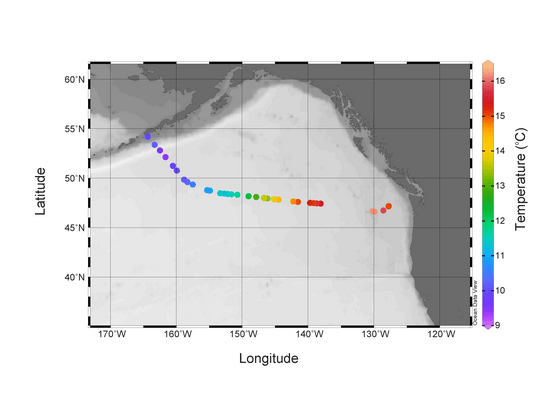
Locations where surface seawater samples were collected for the InFORM project in July 2015. Surface seawater temperatures at the time of collection are shown with values greater than 16C in the anomalous region referred to colloquially as “the blob”.


The purpose of this short post is to update readers on the activities of the Integrated Fukushima Ocean Radionuclide Monitoring (InFORM) project. This post is the most recent in a series documenting scientific research into the impact of the Fukushima Dai-ichi disaster on environmental and public health. Surface seawater samples were collected from the icebreaker CCGS Sir Wilfrid Laurier as it traveled between Victoria BC to Dutch Harbor Alaska during July 2015. These seawater samples will be analyzed to characterize the distribution of Fukushima derived radionuclides 137-Cesium (137Cs half life ~30 years), and 134-Cesium (134Cs half life ~2 years). As in previous years this information will help to determine how well model predictions of the activities and progression of ocean borne contamination across the Pacific Ocean match with observations. Understanding the spread of this contamination provides important information on the impact of the Fukushima Dai-ichi disaster on the health of the Pacific ecosystem and the North American public. The evolution of the contaminant plume in time and space also helps the scientific community to better understand ocean mixing which is a key parameter toward understanding the oceans role in mitigating atmospheric greenhouse gas increases and climate change.
Continue reading Update: Sampling for Fukushima Derived Radionuclides in the Northeast Pacific and Arctic 2015

July 2015 InFORMal Monitoring Update

July 2015 CS update-web-01
InFORMal monitoring results for water samples collected in April/May 2015

Results* from April citizen science monitoring are now available from 8 of 11 (above: bold italics) of the current InFORM sampling locations. Additionally, two samples from May are available from Ucluelet and Port Renfrew. The Ucluelet sample was collected by the Ucluelet Aquarium for our partner organization, Our Radioactive Ocean, on May 7th and did contain trace amounts (0.5 Bq m-3) of the Fukushima fingerprint, 134Cs, with it’s short ~2 year half life.  The total level of activity from this sample is roughly half the activity of the February sample, which was the last time 134Cs was detected on the BC coast.   Continue reading July 2015 InFORMal Monitoring Update