Category Archives: Peer Reviewed

The Apollo 13 Mission and Rescue: How much plutonium was added to the Earth’s environment?

By Jay T. Cullen

The purpose of this short post is to compare the relative amounts of radioactive plutonium released to our environment from the Apollo 13 mission in April 1970 and the

1280px-Apollo_13-insignia.png
Apollo 13 mission patch/emblem with a depiction of the Greek god of the Sun and latin phrase “Ex Luna, Scientia” which means “From the Moon, Knowledge.”

Fukushima Daiichi nuclear power plant disaster that began in March 2011.  Apollo 13 was the third mission planned to bring American astronauts to land on the moon and conduct scientific studies there.  On April 11 1970 the Saturn V rocket carrying astronauts James Lovell (Commander), Fred Haise (Lunar Module Pilot) and Jack Swigert (Command Module Pilot) was launched from the Kennedy Space Center in Florida.

The mission plan was to land Lovell and Haise in the Fra Mauro highland area of the moon but, due to unforeseen circumstances, that never came to pass.  As many of you know as was popularized in the 1995 film directed by Ron Howard and starring Tom Hanks (Lovell), the late Bill Paxton (Haise) and Kevin Bacon (Swigert) the lunar landing was aborted after a malfunction in one of the service module oxygen tanks caused an explosion that crippled the spacecraft.

Apollo_13_Service_Module_-_AS13-59-8500.jpeg
Photo of the damaged Service Module taken shortly after it was jettisoned by the Apollo 13 crew.

What followed was a technical problem solving masterpiece to bring the astronauts safely back to Earth with limited power and life support systems. The rescue of Lovell, Haise and Swigert has been characterized as a “successful failure” and NASA’s finest hour.

Plutonium in the Environment from Apollo 13

A consequence of not having landed on the moon was that the descent stage of the Lunar Module (LM; which would normally have brought Lovell and Haise down to the surface and been left behind when they returned) was now being brought back to Earth.  The power and life support afforded by the LM was central to the successful rescue of the crew.  What is significant about this is that the power supply attached to the descent stage of the LM to be left on the lunar surface to provide electric power for the Apollo Lunar Surface Experiment Packages (ALSEP) was a SNAP-27 Radioisotope Thermal Generator (RTG) containing 1,650 TBq (TBq = 1012 Becquerel) or roughly 3.9 kilograms of plutonium oxide fuel.  While the RTG was essential to bring astronauts home safely the high velocity reentry of the LM raised the possibility of contaminating the atmosphere and surface Earth with worrying amounts of Pu.  To avoid the possibility of the RTG coming down in a populated area the flight engineers had the LM enter the Earth’s atmosphere such that the RTG would be deposited in the remote Pacific Ocean near the Tonga Trench where water depth is about 6-9 kilometers.  Measurements in the atmosphere and ocean following the reentry of the LM suggested that the RTG had survived intact and little of the Pu was broadcast in the environment.  Tests of the RTG casing suggest that this 3.9 kg of Pu, somewhere on the seafloor of the Pacific, will not be mobilized for another ~800 years.
https://www.facebook.com/plugins/post.php?href=https%3A%2F%2Fwww.facebook.com%2FFlightOfApollo%2Fposts%2F1121563224620322%3A0&width=500

Plutonium Released From Fukushima

The triple meltdown and hydrogen explosions at the Fukushima Daiichi Nuclear Power Plant (FDNPP) are known to have released some of FDNPP Pu isotope inventory to the environment.  Direct measurements of air, water and soil and modeling of the temperature and pressure in the reactors during the meltdowns by the international scientific community have allowed the total amount of Pu broadcast to the environment during the period of peak releases in the weeks to month following the disaster. These direct measurements made globally, the models and comparisons with isotopes that were released in much greater quantities (e.g. 137-Cesium and 131-Iodine) indicate that about 2.3 x 10⁹ Bq or about 580 milligrams of Pu left the FDNPP in the wake of the disaster.  This is about 700,000 fold less Pu than Apollo 13’s RTG.  While the Apollo 13 Pu is likely to have little environmental impact given that it will be released slowly to the deep ocean over time I think it is interesting to compare the total amounts given the perceived impact of the FDNPP releases.  Both the FDNPP and Apollo 13 Pu are dwarfed by the ~11 PBq (PBq = 1015 Bq) of Pu-239,240 released to the atmosphere as a result of nuclear weapons testing in the 20th century.

It’s safe to return to some parts of Fukushima, study suggests

Bags of contaminated topsoil are collected at a temporary storage site in Fukushima prefecture. (Kyodo/AP Images)

By Katherine Kornei
Originally Published in Science
Mar. 10, 2017

Six years after Japan’s Fukushima Daiichi Nuclear Power Plant disaster, thousands of former residents evacuated from the region are returning home. But is it safe? A new study says yes, finding that inhabitants of a never-evacuated village just 60 kilometers away don’t have to worry about dangerous levels of radiation over their lifetime. The team also found that natural radioactive decay and weathering from rain deserve far more credit for reducing radiation levels than do expensive decontamination efforts, like topsoil removal. Continue reading It’s safe to return to some parts of Fukushima, study suggests

Fukushima Six Years On

In the last year, TEPCO has continued its efforts to reduce groundwater flow though the site, has capped the port sediments to reduce the risk of resuspending radionuclides, and has begun evaluating the current state within the primary containment vessels of reactors 1 – 3 while also working on construction of the cranes that will be necessary for eventual removal of spent fuels and decommissioning.

Groundwater flow at the site has been reduced by two-thirds since freezing of the ice wall began at the end of March 2016. The wall has been frozen in a phased approach and currently roughly five sections of the wall on the mountain side of the site have yet to be frozen which should further reduce water flow.

Two layers of capping sediments have been laid down within the Fukushima marine port in an effort to limit resuspension of radionuclides in the sediments through water or animal movements of sediments. The areas immediately adjacent to the reactors were covered in 2012, but the cap over the rest of the port was completed in December 2016. Water samples within the port show that contamination has decreased substantially since 2013 and that levels of 134Cs have dropped below the TEPCO detection limit (280 – 640 Bq m-3) in most locations. Levels of 137Cs remain between 480 and 3,100 Bq m-3 within the port. Immediately outside the port, levels of both 134Cs and 137Cs are below detection limits (420 – 800 Bq m-3). While these levels far exceed what we are measuring on the west coast of British Columbia, and are far higher than InFORM detection limits, they are a significant drop compared to what was seen even in 2013 and are below the Canadian action level for drinking water of 10,000 Bq m-3, though drinking seawater is never a good idea for humans.

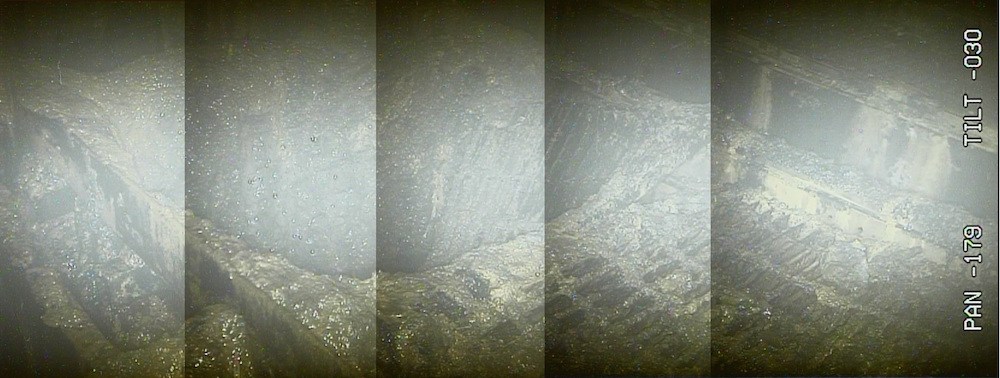
At units 1 and 3, construction of building covers and cranes to remove debris and materials from the spent fuel pools is ongoing. Gaining more press attention were the results and images from two robotic incursions into the primary containment vessel of reactor 2 in January. Not unexpectedly, as the robots approached to the reactor pressure vessel, radiation levels increased to the highest levels yet measured at the site, potentially fatal to humans if exposed for only a few seconds. While the robots were disabled by the conditions, the images are vital for developing an initial plan later this year for the lengthy decommisioning process ahead. Robotic investigations of the primary containment vessel are planned for reactor 3 in the coming weeks. Additional robotic imaging missions will be necessary to obtain a better picture of the damages sustained and the current fuel placement after the meltdowns in 2011.

Source: TEPCO

Additional recent reporting from Science.

As evacuees move back, Fukushima cleanup faces daunting obstacles

Workers decontaminate a forest near Fukushima in Japan. Jeremy Sutton-Hibbert/Alamy Stock Photo

By Dennis Normile
Originally published in Science
Mar. 2, 2017

TOKYO—Six years into a decommissioning effort expected to last into the 2050s, an official leading the work on the stricken Fukushima Daiichi Nuclear Power Plant claims that cleanup crews are making “steadfast progress.” But thorny technical obstacles must be overcome.

The 9.0-magnitude earthquake off Japan’s northeast coast on 11 March 2011 triggered one of history’s most devastating tsunamis. The one-two punch killed nearly 16,000 people, left more than 2500 missing, and wiped out infrastructure in coastal communities.

The tsunami also knocked out Fukushima’s systems for cooling its nuclear reactors, causing core meltdowns in three of the plant’s six reactors. Hydrogen explosions blew out the walls and roofs of the buildings housing units 1, 2, and 3, releasing massive amounts of radiation [editors note: explosions were in units 1, 3, and 4]. Much of the contamination was swept into the Pacific Ocean, but winds deposited fallout over parts of northeastern Japan. Some 160,000 people living near the plant were evacuated or fled on their own.

On the eve of the sixth anniversary of the disaster, officials took pride in what they view as successful efforts to minimize the health threat to surrounding communities. Radiation from the crippled reactors is no longer having an impact outside the plant, Naohiro Masuda, head of decommissioning for Fukushima owner Tokyo Electric Power Co. (TEPCO), said today at a briefing here. He noted that evacuated residents are returning to their homes as decontamination work reduces exposure levels below thresholds. At the power plant, radiation levels are now so low that the 6000 workers slowly demolishing the damaged reactor halls need only wear typical construction site safety gear except when working near the three reactors that suffered meltdowns. And radiation levels just offshore remain below the limit for drinking water set by the World Health Organization, Masuda said. Given the progress, he reiterated that TEPCO is confident they can stick to a previously set roadmap that envisions completing the decommissioning 30 to 40 years after the accident. But doing so won’t be cheap. Last December, Japan’s Ministry of Economy, Trade and Industry revised its estimate of the total cost of decommissioning up to $188 billion.

Stemming ocean contamination has been a thorny challenge. Since early in the crisis, crews have circulated water through the damaged reactors to prevent overheating that could lead to further fuel melting. That water, and groundwater flowing through the site, is heavily contaminated and TEPCO has struggled to keep it from seeping into the Pacific. Schemes to divert groundwater away from the plant and freeze a wall of soil around the reactors down to bedrock—to contain contaminated water—have minimized leaks, Masuda said.

In the meantime, TEPCO has accumulated 960,000 tons of contaminated water stored in 1000 10-meter-tall tanks at the site. TEPCO has removed cesium, strontium, and more than 50 other radionuclides from that water. But they have been stymied by tritium, a radioactive hydrogen isotope in the water. Several experimental approaches to removing the tritium “were judged to be impractical,” Masuda said.

Tritium occurs naturally in water but in minuscule concentrations. Simply releasing the tritium-laden water, perhaps after further dilution, is one disposal option, Masuda said. Another would be to evaporate the water, releasing some tritium into the atmosphere, as was done at the Three Mile Island nuclear plant in Pennsylvania after its 1979 accident. An advisory committee is now studying the problem and will hold discussions with local communities “so TEPCO will be able to act in a responsible manner in dealing with the tritium,” Masuda said.

Another major hurdle is determining the condition and location of the melted fuel, much of which is believed to have dropped to the bottoms of the containment vessels where high radiation levels preclude human entry. Robotic investigations are proving problematic. In January, the camera on a robotic probe sent into the Unit 2 containment vessel was fried by radiation, though it did return important images before its demise. Then last month, a small robot on tanklike treads was sent through a 10-centimeter-diameter pipe into the vessel to investigate the presumed location of the damaged fuel. But it got tangled up in debris and was abandoned.

TEPCO is now thinking it might need a robot able to jump over debris. And they are planning robotic investigations of the units 1 and 3 containment vessels in preparation for a planning session this summer to set a policy for recovering the melted fuel.

Posted in:

DOI: 10.1126/science.aal0849

Fukushima residents exposed to far less radiation than thought

by Katherine Kornei
Published in Science
23 Jan 2017

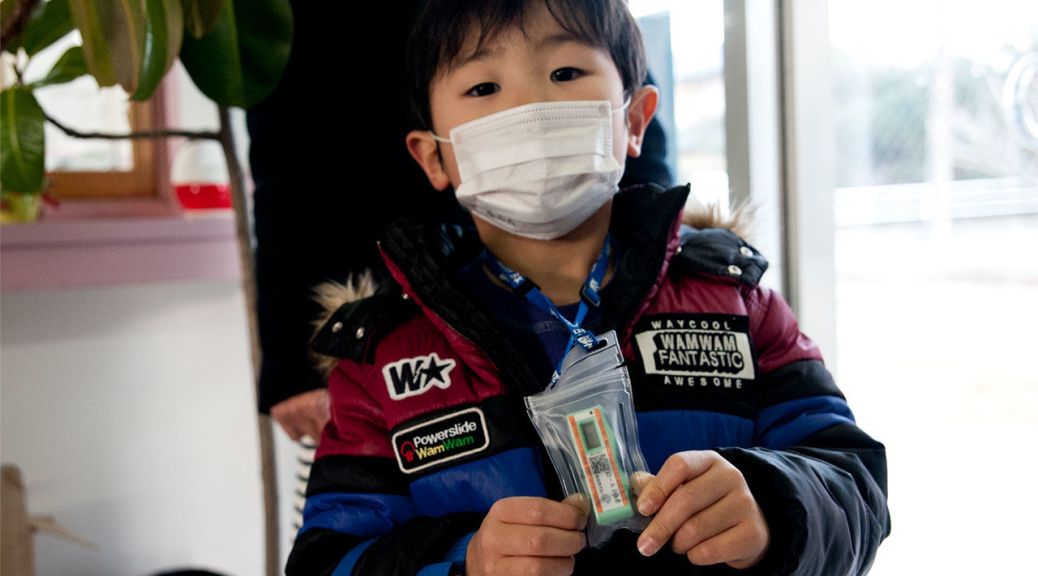
Citizen science usually isn’t this personal. In 2011, roughly 65,000 Japanese citizens living near the crippled Fukushima Daiichi Nuclear Power Plant started measuring their own radiation exposure in the wake of the Tōhoku earthquake and tsunami. That’s because no one, not even experts, knew how accurate the traditional method of estimating dosage—taking readings from aircraft hundreds of meters above the ground—really was. Now, in a first-of-its-kind study, scientists analyzing the thousands of citizen readings have come to a surprising conclusion: The airborne observations in this region of Japan overestimated the true radiation level by a factor of four.

Continue reading Fukushima residents exposed to far less radiation than thought