Category Archives: Monitoring

More Fukushima Question and Answer: Why don’t you measure contamination in marine algae?

By Jay T. Cullen

Diatoms under the microscope. Important marine algae that form the base of the food web in oceanic environments. From http://www.nsf.gov/news/news_images.jsp?cntn_id=128913&org=NSF


The purpose of this post is to address common questions related to Fukushima monitoring efforts being conducted by the Integrated Fukushima Ocean Radionuclide Monitoring (InFORM) network in the northeast Pacific Ocean and coastal waters of Canada. This diary continues a series aimed to report the results of scientific research into the impact of the Fukushima disaster on the environment. I am asked routinely why we do not measure contamination in marine microalgae, the base of the marine foodweb, given that they concentrate radionuclide contamination from Fukushima found in seawater into their cells as they grow. The extremely low levels of contamination found from Fukushima in the northeast Pacific Ocean combined with the very small amounts of microalgae present in oceanic waters make such monitoring logistically infeasible. Follow below the fold for the detailed answer. Continue reading More Fukushima Question and Answer: Why don’t you measure contamination in marine algae?

June 2015 InFORMal Monitoring Update

June 2015 CS update
InFORMal scientist monitoring results, June 2015

Results* from water samples collected in April are now available from 5/14 (above: bold italics) of the current InFORM sampling locations. While our expectations are that the plume would first appear in samples from the southern outer coast of Vancouver Island, the new data from other regions does not yet have any measureable 134Cs, the fingerprint of the Fukushima plume due to its short ~2 year half-life.  Continue reading June 2015 InFORMal Monitoring Update

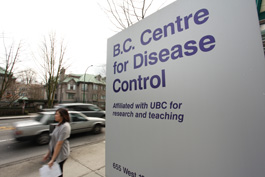
Fukushima InFORM Monitoring Data Now Available from the British Columbia Centre for Disease Control

By Jay T. Cullen

BCCDC_P_Building_Exterior_Sign3_W265web

In an effort to communicate the results of our investigation into the impact of the Fukushima disaster on Canadian ocean ecosystems and the public our data is now being shared through the British Columbia Centre for Disease Control.  The BCCDC is an agency under the Provincial Health Services Authority and their website is a fantastic resource for those concerned about a multitude of health issues.  In particular they have a very information rich section devoted to radiation in the environment and health of BC residents. This Frequently Asked Questions (FAQ) page regarding the Fukushima Dai-ichi disaster is particularly useful and well presented.  InFORM and partner organization Our Radioactive Ocean’s citizen science seawater monitoring data can be found on the BCCDC website here. Thanks to our colleagues at BCCDC for their continued work guarding the health of BC residents.

Sea Star Loss From Our Coast Might Be Mussels Gain


By Jay T. Cullen

Note that the video above was shot on May 8, 2015, set to Debussy’s Clair de Lune, by the YouTube user NorthOlbo who makes wonderful pieces about the British Columbian coast. Check him out.

The purpose of this more visual post is to report on a recent trip my students and I took to a local beach and what we saw there. Botanical Beach is renowned for its tide pools and part of the Juan de Fuca Provincial Park here on the southwest coast of Vancouver Island, British Columbia Canada. There are strange conditions currently in the northeast Pacific from the “blob” of warm water related to anomalous winter mixing in 2013-2014 to the widespread disappearance of sea stars owing to wasting disease after infection by virus. Some link these changes in the marine ecosystem to the very low levels of Fukushima derived radioisotope contamination present offshore and recently detected at the shoreline although there is little evidence to support such views nor are such impacts very likely. There is indeed life abundant at Botanical Beach but it is changing. The sea star is a keystone predator whose removal has consequences. The most obvious of these on visiting the beach again was the predominance of California mussels to be found. More about our adventure below the fold. Continue reading Sea Star Loss From Our Coast Might Be Mussels Gain

May 2015 InFORMal Monitoring Update

May2015 w Labels-01
InFORMal monitoring results from samples collected in March 2015

Results* from March are now available from 10/12 of the current InFORM sampling locations. Recent samples from Sandspit and Bella Bella are still being processed and data shown are from February. After the positive measurement of Fukushima-derived 134Cs radiation in February at Ucluelet, we expected this signal to spread in samples collected in March. Instead, there is no detectable 134Cs (detection limit ~0.2 Bq m-3) in any of the March samples. Continue reading May 2015 InFORMal Monitoring Update