Tag Archives: InFORM

June 2015 InFORMal Monitoring Update

June 2015 CS update
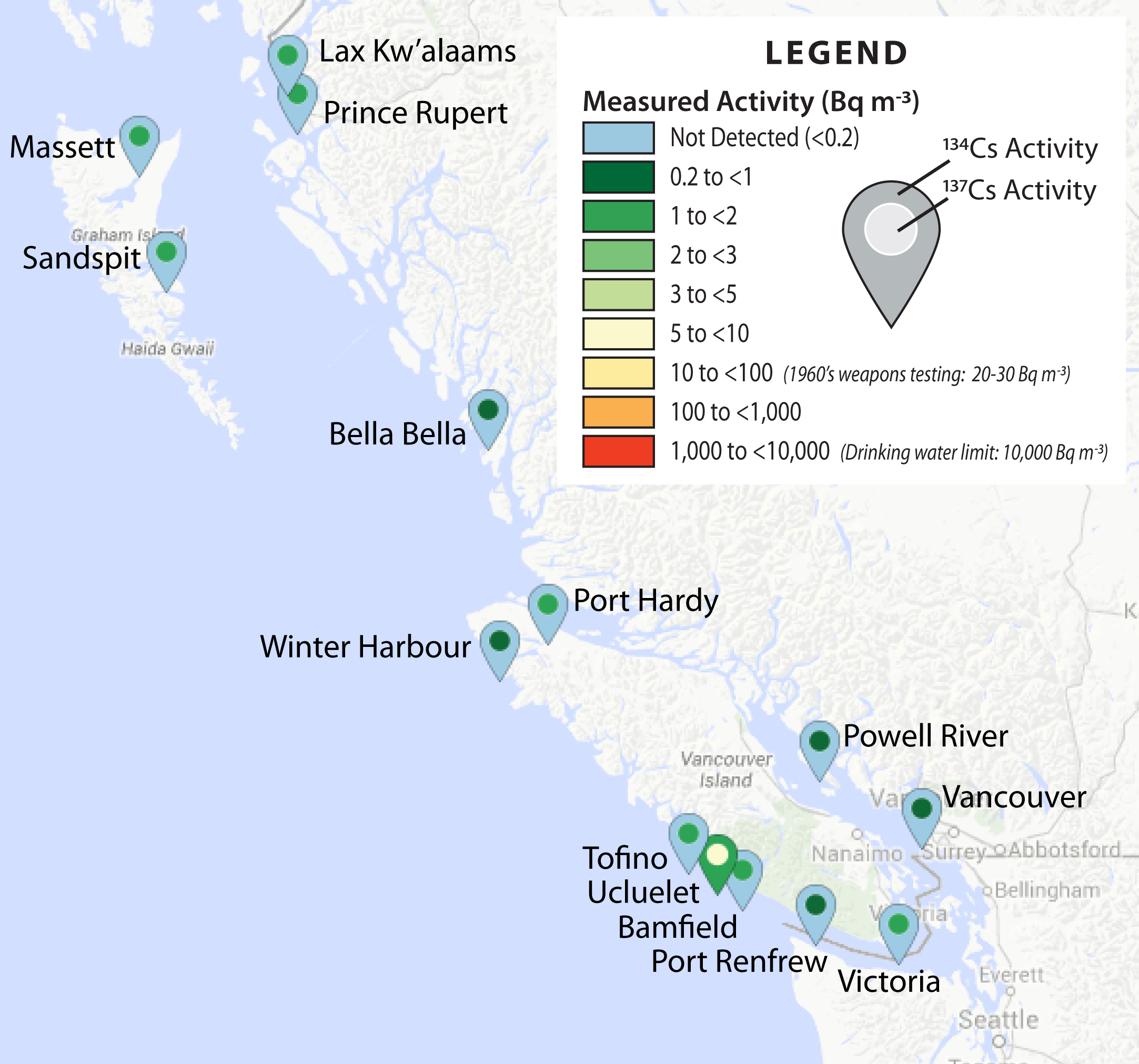
InFORMal scientist monitoring results, June 2015

Results* from water samples collected in April are now available from 5/14 (above: bold italics) of the current InFORM sampling locations. While our expectations are that the plume would first appear in samples from the southern outer coast of Vancouver Island, the new data from other regions does not yet have any measureable 134Cs, the fingerprint of the Fukushima plume due to its short ~2 year half-life.  Continue reading June 2015 InFORMal Monitoring Update
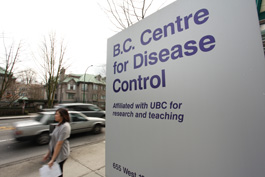
Fukushima InFORM Monitoring Data Now Available from the British Columbia Centre for Disease Control

By Jay T. Cullen

BCCDC_P_Building_Exterior_Sign3_W265web

In an effort to communicate the results of our investigation into the impact of the Fukushima disaster on Canadian ocean ecosystems and the public our data is now being shared through the British Columbia Centre for Disease Control.  The BCCDC is an agency under the Provincial Health Services Authority and their website is a fantastic resource for those concerned about a multitude of health issues.  In particular they have a very information rich section devoted to radiation in the environment and health of BC residents. This Frequently Asked Questions (FAQ) page regarding the Fukushima Dai-ichi disaster is particularly useful and well presented.  InFORM and partner organization Our Radioactive Ocean’s citizen science seawater monitoring data can be found on the BCCDC website here. Thanks to our colleagues at BCCDC for their continued work guarding the health of BC residents.

May 2015 InFORMal Monitoring Update

May2015 w Labels-01
InFORMal monitoring results from samples collected in March 2015

Results* from March are now available from 10/12 of the current InFORM sampling locations. Recent samples from Sandspit and Bella Bella are still being processed and data shown are from February. After the positive measurement of Fukushima-derived 134Cs radiation in February at Ucluelet, we expected this signal to spread in samples collected in March. Instead, there is no detectable 134Cs (detection limit ~0.2 Bq m-3) in any of the March samples. Continue reading May 2015 InFORMal Monitoring Update

How Much Radioactivity Are We Exposed to While Sampling Seawater for Fukushima Radioisotopes?

By Jay T. Cullen

The purpose of this post is to introduce a brief, informal movie made while using a Geiger Counter in the laboratory today. This diary is part of an ongoing effort to communicate what the scientific community is learning about the impact of the Fukushima disaster on environmental and public health. A Geiger Counter was used to examine ionizing radiation counts per minute in the laboratory owing to background radioactivity, the concentrated natural and man made isotopes in 20 liters of seawater collected by InFORM citizen scientist volunteers, the uranium oxide glaze on a Fiestaware dinner platter and Uraninite ore mined from New Hampshire. This simple demonstration supports more sensitive measurements indicating our citizen scientists are exposed to no more ionizing radiation than is typical of background when collecting seawater samples.

Continue reading How Much Radioactivity Are We Exposed to While Sampling Seawater for Fukushima Radioisotopes?

April 2015 InFORMal Monitoring Update

April2015 w Labels
InFORMal monitoring results from samples collected in February and March 2015

Results* from early February and March are now available from 10/13 of the InFORM sampling locations. Recent samples from Bamfield, Vancouver, and Powell River are still being processed. To date, no InFORM coastal samples have detectable (detection limit ~0.2 Bq m-3) levels of 134Cs, the radionuclide that is the fingerprint of Fukushima derived radiation due to its short half life (~2 years). An interesting note is that the February Tofino sample was collected on the 7th, just 12 days before the ORO sample collected in Ucluelet that was the first to contain measureable 134Cs. Continue reading April 2015 InFORMal Monitoring Update